They can all play the notes rapidly and most can even get into the music. Carroccia was something different […]
He has that elusive who-knows-what that separates one artist from the others, and the chatter at intermission confirmed that the audience also realized the excellence we experienced
Gregory Sullivan Isaacs
BIO
Since then, his concert activity has seen him regularly engaged in Italy and abroad for festivals such as the Duszniki International Chopin Piano Festival, the Dresdner Musikfestspiele and in halls such as the Ishibashi Memorial Hall of the University of Tokyo, Flagey in Brussels, the Symphony Hall and Town Hall in Birmingham, the Bibiena Theater in Mantua, the Sale Apollinee of the Teatro La Fenice in Venice, the Museo Teatrale alla Scala in Milan, the Salle Bourgie in Montreal and the Tbilisi State Conservatoire.
In February 2025 he appeared on the cover of the classical music magazine Amadeus with a CD of the two Piano Concertos by Fryderyk Chopin in the transcription for piano and string quintet, and his performances have been broadcast several times on Rai Radio3.
Described by the Fort Worth Star-Telegram as an aristocrat of the piano, Luigi Carroccia has won numerous awards in national and international competitions including the Virtuoso Prize at the Vendome Piano Prize held during the 2019 Verbier Festival and the Abbado Prize awarded by the MIUR in memory of Claudio Abbado.
He has established himself nationally and internationally at the Van Cliburn Competition in Fort Worth, the Ferruccio Busoni Competition in Bolzano and the Fryderyk Chopin Competition in Warsaw, where they wrote about him:
“Luigi Carroccia emerged as an artist, one of the few who grasped the real essence of Chopin as this listener envisions him.” (Edith Hall-Friedheim)

Luigi began his musical studies playing the accordion under the guidance of his father and grandfather. He subsequently obtained his Diploma and Master’s Degree in piano with top marks and honorable mention at the “C. Monteverdi” Conservatory in Bolzano in the class of G. A. Brustia.
In 2016 he received a two-year Junior Fellowship at the Royal Birmingham Conservatoire, and his artistic growth continued at the Queen Elisabeth Music Chapel in Waterloo, where he was Artist in Residence from 2018 to 2022 in the class of Louis Lortie.
Among his future projects, between 2026 and 2028 Luigi will be engaged in the performance of the complete piano sonatas by the composer F. Schubert.
He’s currently part of the piano faculty at the Morlacchi Conservatory of Perugia and he is the Artistic Director of the International Classical Music Festival “Riviera di Ulisse”.
Luigi is an Artist in Residence of the Fondazione Nicola Bulgari.

Among his future projects, between 2026 and 2028 Luigi will be engaged in the performance of the complete piano sonatas by the composer F. Schubert.
He’s currently part of the piano faculty at the Morlacchi Conservatory of Perugia and he is the Artistic Director of the International Classical Music Festival “Riviera di Ulisse”.
Luigi is an Artist in Residence of the Fondazione Nicola Bulgari.










Competition
Van Cliburn, Fort Worth
“Luigi Carroccia took the stage with an air of confidence born out of being secure with his abilities. And was he ever. As his performance went on, the realization of his gift only grew stronger. They can all play the notes rapidly and most can even get into the music. Carroccia was something different.
He gave each selection a definitive performance, and that is not a compliment nor hyperbole. It is a fact, and one that continued to reveal itself as the program continued, until it became impossible to dismiss.
He has that elusive who-knows-what that separates one artist from the others, and the chatter at intermission confirmed that the audience also realized the excellence we experienced.
There isn’t any reason to pull out my thesaurus of adjectives to describe the program in detail. He delivered a spectacular performance, sitting upright on the chair only needing to use his body in the biggest moments for effect.
The other thing to mention is the complete independence of his hands, as if they belonged to two different people. They complemented each other, sometimes in the background and other times taking the lead.
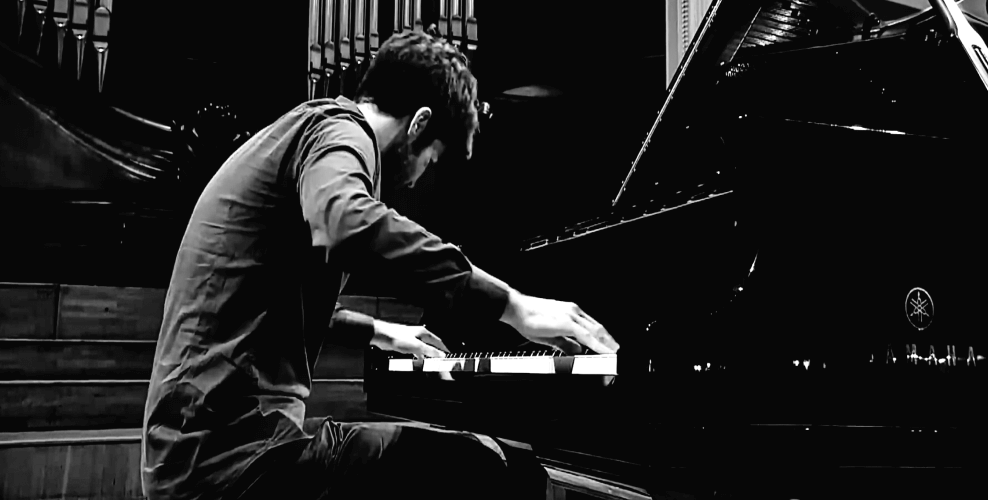
If there was a wrong note, I didn’t hear it. But I did hear many notes that I never realized were there as he brought out hidden nuggets in practically every phrase.
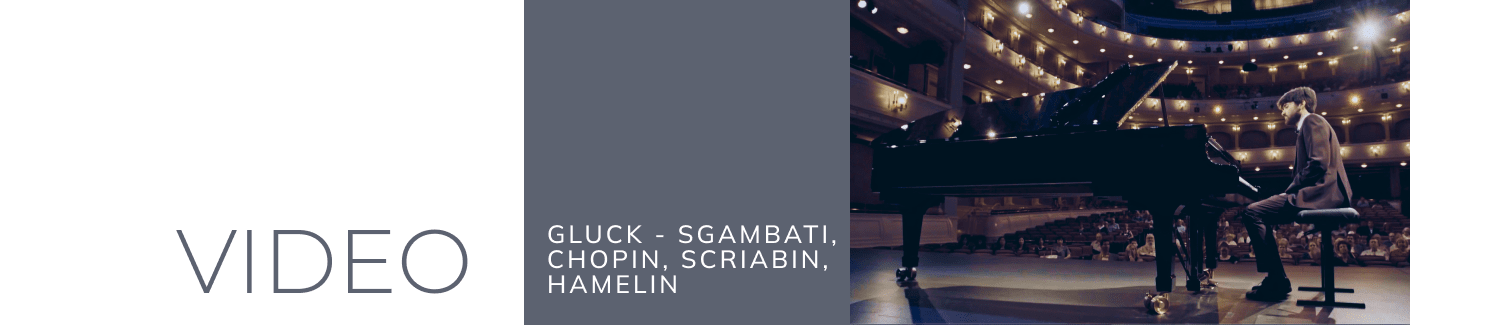
In the Gluck, we heard him play the solo line as if it were on a string or wind instrument. What a lovely way to start what looks like a grueling day! In the Chopin, he knew exactly what to do. Some statements were incredibly soft and the big ones were forceful without overplaying the instrument.
Some upward scales were more like a breeze than real notes. The penultimate chords were hushed to allow for one final splash. When he started the Scriabin, we were suddenly in another sonic universe and he was equally at home.
He closed with the Hamelin, which in other hands may not be the wisest move. Not to worry. His conception leaned to the romantic side but as seen through Ravel. He sent me back to the score to see if I missed the boat on my initial evaluation of it. He may have looked calm and collected. And perhaps he was, but his frequent mop of his brow showed how hard he was working on the inside.
It was an amazing performance and it will be a shock if he doesn’t advance.
Gregory Sullivan Isaacs, Theater Jones

Competition
Van Cliburn, Fort Worth
Italian pianist turns melody into magic in the Cliburn Prelims.
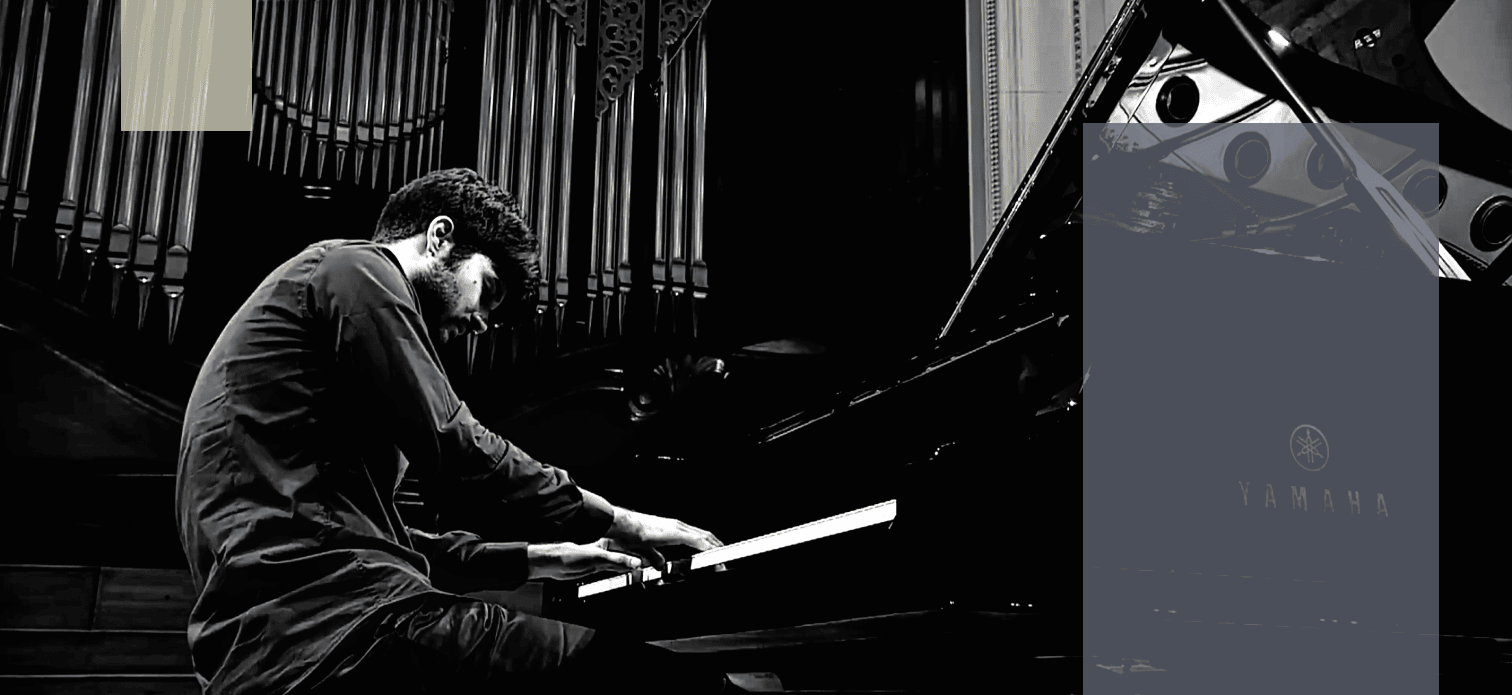
Carroccia is an aristocrat of the piano; there doesn’t seem to be a nonmusical atom in his being. That became apparent with his first notes. He began with a short, modest piece — an arrangement of a melody from Gluck’s opera Orfeo ed Euridice — and turned it into magic. Its beauty was irresistible.
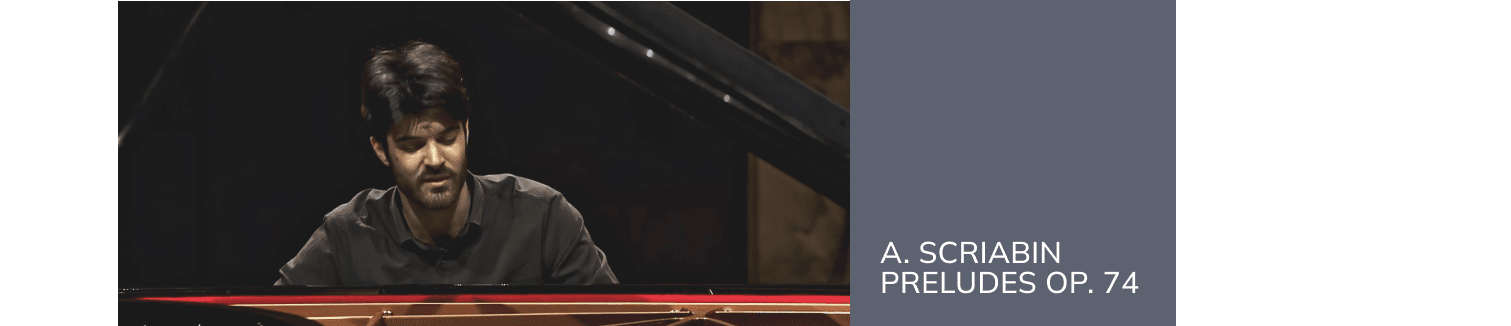
A lovely Chopin Polonaise-Fantaisie and an eloquent third sonata by Scriabin preceded the biggest surprise of his recital: He gave Hamelin’s required toccata prominence by placing it last on his program (most put it elsewhere) and found things in it that others have missed.
He created subtleties of tempo, dynamics and emphasis that seemed inevitable. In short, in Carroccia’s hands Hamelin’s toccata seemed a work of art, not an exercise.
Olin Chism, Fort Worth Star-Telegram

Competition
chopin, varsavia
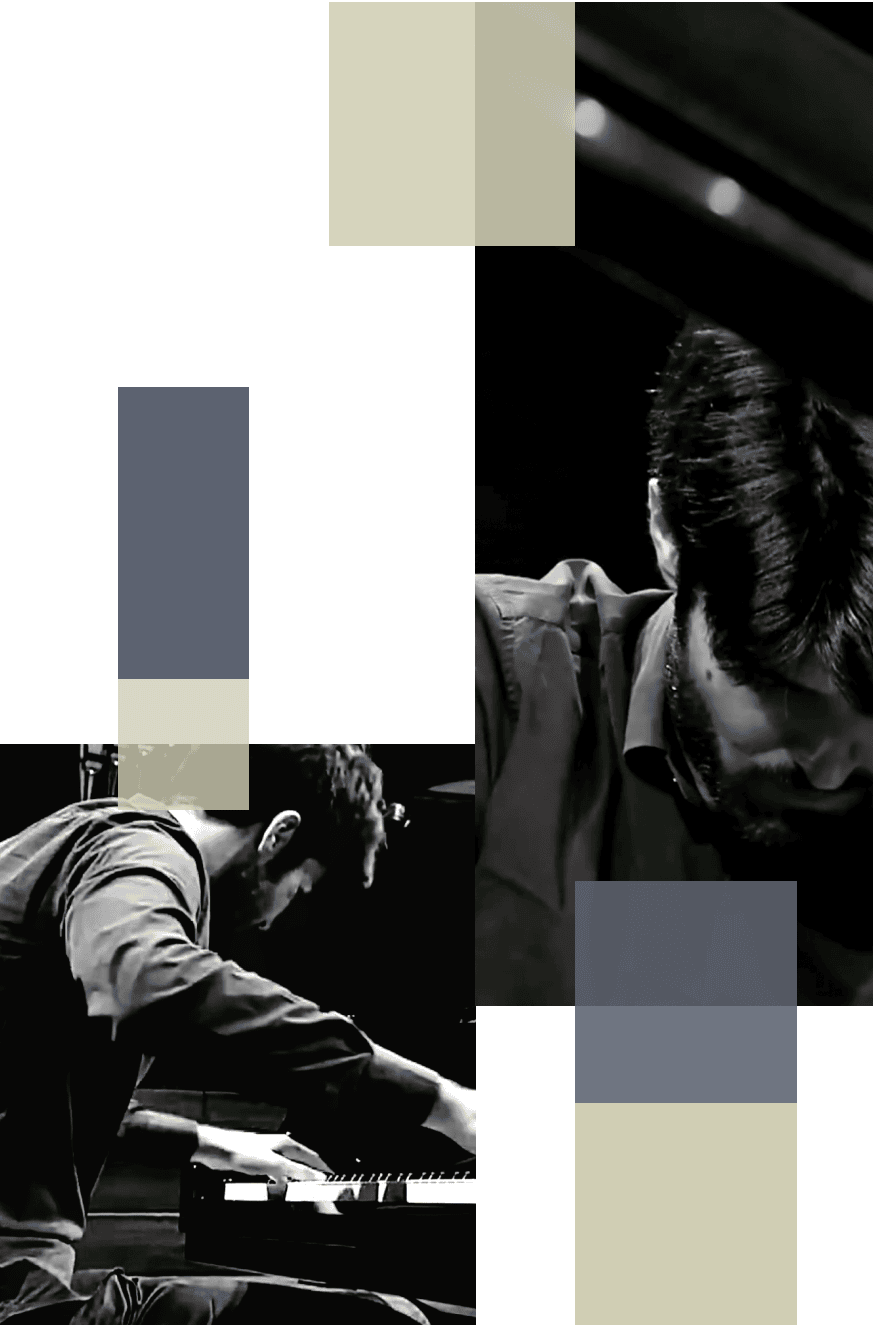
Luigi Carroccia emerged as an artist, one of the few who grasped the real essence of Chopin as this listener envisions him.
Edith Hall-Friedheim
The Italian pianist turned out to be the one for whom I had been waiting in many regards – he was able to reach for the music in which he evidently feels best: song-like, not excessively dramatic. His Impromptu in F-sharp minor was for me – besides the Barcarolle from the first round – the most chopinistic Chopin in this Competition
Jakub Puchalski, Tygodnik Powszechny
On the stage of the National Philharmonic appeared an artist who I immediately recognized as one of the most likely candidates for the first prize of the Competition, and the prize for the best execution of the mazurkas […].
The interpretation of Carroccia is intriguing in many aspects, among these I appreciated the richness of sound – which is rarely found among young performers – and the idiomatic, sometimes even improvised, approach to the musical material.
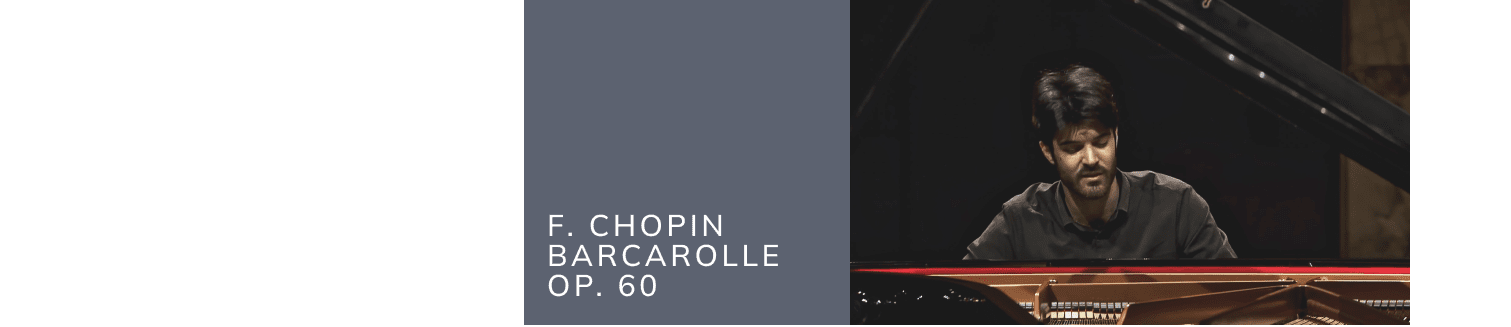
The Barcarolle, op. 60, perceived by the Italian, brought to the mind a story with several chapters, full of both dancing and contemplative episodes. The pianist (like no one before in the preliminaries), managing to perfectly manipulate the rubato, influenced positively the development of the piece’s narrative. The Mazurkas were also sensational, even if Carroccia interpreted these miniatures in an extremely subjective way, making them more like little dancing poems full of emotional gradations.
The Nocturne in D flat major op. 27 n. 2 was perceived by me as a preview of a young Alexander Skrjabin, not fearing Carroccia or daring dynamics or almost expressionist agogic proposals.
Dariusz Marciniszyn, Ruch Muzyczny
REviews
CARROCCIA SHINES IN CHOPIN AND SCRIABIN
“This would appear to be a young man’s concert, promising a keyboard-pounding evening of flash and fire. There was Scriabin, Chopin and Rachmaninoff, with Bach appearing only in an arrangement by the Italian pianist and composer Ferruccio Busoni.
But while Carroccia has ample technique, he chose works from these composers’ more lyric and contemplative sides, giving a recital in which his range of tone colors, gift for long melodies and yes, ability to zip up and down the keyboard and play rapid-fire octaves when called for, came in service of the music.[…]

REviews
Beethoven reviewed by Liszt at the Salle Bourgie: amazing!
Luigi Carroccia has something completely different in store for us with the Sixth Symphony, “Pastorale”, which he plays without scores. If the work, more airy, more “atmospheric”, appears less dense, perhaps more technically accessible than the previous one, however, he proves to be an artist of undeniable talent.
The pianist is never in a hurry to speak, masterfully painting atmospheres with an impressive palette of colors. Think of the sounds of the birds at the end of the second movement, or the formidable storm that serves as the fourth movement, a piece that, with its roaring low octaves, almost sounds more Liszt than Beethoven.
Emmanuel Bernier
He opened with a grave and solemn performance of the Bach- Busoni choral prelude “Ich ruf zu dir, Herr Jesu Christ” (“I call to you, Lord Jesus Christ”). His soft but assured style drew glowing, organ-like tones from the keyboard, with a big crescendo toward the end that rose and fell without a trace of percussiveness.
Alexander Scriabin composed his Sonata No. 3 in his late 20s, before the Russian pianist- composer’s mind and music departed for unchartered territory. Unlike what was to come later, this work’s melodic and harmonic vocabulary sounded similar to what his late-19th century colleagues were composing.
Carroccia gave a rousing performance, without over-personalizing the music, nor engaging in the sort of rushed, emotionally supercharged playing with which some pianists distort this sort of piece. He showed respect for the rhythmic and melodic structures, with his big tone and assured technique drawing forth the music’s Chopinesque romanticism, its bursts of melody and climactic passages in octaves.
The bass figures in the Andante came off with a smoky allure, and in the last movement, he drew maximum force and emotion from the sudden rhapsodic melody that rose over rumbling bass passages.
From Chopin, he chose some of the composer’s final works: the Barcarolle Op. 60, Polonaise- Fantaisie Op. 61 and Nocturne Op. 62. In the Barcarolle, he brought a light, silvery tone to the ornaments running over the rolling accompaniment in the bass. He gave a detailed account of the Polonaise-Fantaisie, taking the time to relish details such as the harp-like arpeggios that open the work and appear later.
Yet the most impressive thing through all these works was his gift for Chopin’s melodies. In these passages, which typically fall within the range of the human voice, he played with a natural rubato, drawing out their tensions and emotional ache in a manner that seemed to bring out the essence of Chopin’s music.
David Fleshler
Beethoven reviewed by Liszt at the Salle Bourgie: amazing!
Luigi Carroccia has something completely different in store for us with the Sixth Symphony, “Pastorale”, which he plays without scores. If the work, more airy, more “atmospheric”, appears less dense, perhaps more technically accessible than the previous one, however, he proves to be an artist of undeniable talent.
The pianist is never in a hurry to speak, masterfully painting atmospheres with an impressive palette of colors. Think of the sounds of the birds at the end of the second movement, or the formidable storm that serves as the fourth movement, a piece that, with its roaring low octaves, almost sounds more Liszt than Beethoven.
Emmanuel Bernier
28.02.2026
Ciclo de conciertos en Torrelodones, Madrid
05.03.2026
San Giovanni alla Magliana Hospital, Rome – Solidarity Concert
07.03.2026
Sala dei Notari, Perugia – Perugia Classica, Amici della Musica Season
20.03.2026
Teatro della Cometa, Rome – Concert Season Fondazione Nicola Bulgari
12.04.2026
Palazzo Caetani, Fondi – Festival Riviera di Ulisse
17.04.2026
Teatro della Cometa, Rome – Concert Season Fondazione Nicola Bulgari
18.04.2026
University of Udine – Concert Season 2025 – 2026
19.05.2026
Sala della Protomoteca del Campidoglio, Rome – Concert Season Fondazione Nicola Bulgari
27.05.2026
Teatro Miela, Trieste – Associazione Chamber Music ACM
31.05.2026
Palazzo Vescovile, Mantova – Trame Sonore
01.06.2026
Teatro Biboena, Mantova – Trame Sonore
07.06.2026
Casa Leopardi, Recanati – Circolo di Ave concert season
05.07.2026
Castiglioncello del Trinoro – Monteverdi Tuscany
25.01.2025
Fondi, Palazzo Caetani – Riviera di Ulisse Festival
13.02.2025
Milan, Bocconi University – Isole Sonore
28.02.2025
Busto Arsizio, Teatro Fratello Sole – BAClassica 2025
21.03.2025
San Benedetto del Tronto, Teatro Concordia
28.03.2025
Catanzaro, Palazzo dei Nobili
30.03.2025
Lamezia Terme, Teatro Grandinetti
08.04.2025
London, Bechstein Hall
27.04.2025
Brescia, UniversoMusica – Brescia Chamber Orchestra
11.05.2025
Brescia, UniversoMusica – Brescia Chamber Orchestra
30.05.2025
Mantua, Teatro Bibiena – Trame Sonore
31.05.2025
Mantua, Hall of Tapestries – Trame Sonore
04.06.2025
Trieste, Teatro Miela – ACM Trieste
21.06.2025
Sofia (Bulgaria), Civic Art Gallery
22.08.2025
Cortile Baratta, Mantova – Orchestra da Camera di Mantova
30.08.2025
Minturno Roman Theatre – Festival Riviera di Ulisse
31.08.2025
Sepino Archaeological Area, Campobasso
02.09.2025
Terracina, La Librata – Festival Riviera di Ulisse
12.09.2025
Melle (Germany), St. Petrus ad Vincula – Musik Fest Melle
27.09.2025
Zelioli Lanzini Hall, Cremona – Cremona Musica International Exhibition
18.10.2025
Teatro Cometa, Rome
07.12.2025
Teatro Savoia, Campobasso
21.12.2025
Politeama Garibaldi – Palermo, Amici della Musica